Bill Capehart's Profile

Number of items: 18
Date joined: May 21 2020
I am an Associate Professor in Atmospheric and Environmental Sciences & Civil and Environmental Engi ...Read more I am an Associate Professor in Atmospheric and Environmental Sciences & Civil and Environmental Engineering at the South Dakota School of Mines and Technology. I received my M.S. and Ph.D. in Meteorology from Penn State and my B.S. in Atmospheric Sciences from the The University of North Carolina at Asheville. Currently at SDSMT I am the program director of the Atmospheric and Environmental Sciences Program, and I do research in hydrometeorology, forecast risk assessment, and climate change.
Bill Capehart's Work
#1
#2
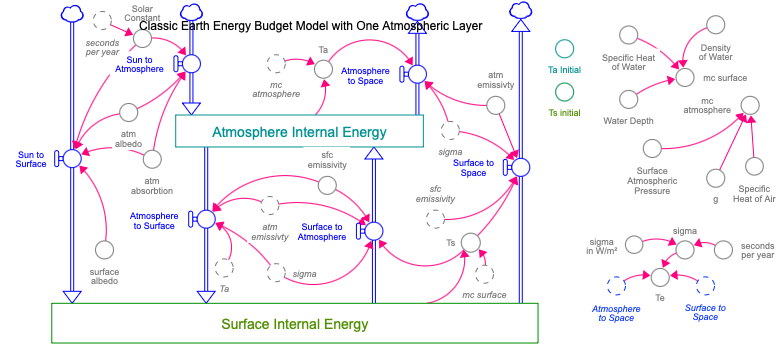
Earth Energy Budget with One-Layer Atmosphere
Classic Earth Energy Budget Model with a simple single atmospheric layer.
#3
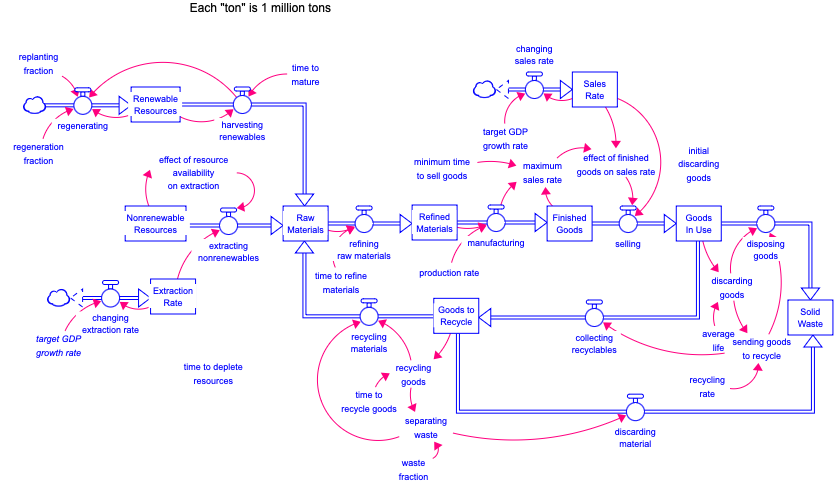
Bills Copy of the LCA
This model was copied from isee systems:
One of the greatest environmental challenges we face is ho
... Read more
This model was copied from isee systems:
One of the greatest environmental challenges we face is how to do more with less: Less raw materials, less pollution, less damage to the environment. This model shows the life-cycle assessment for the aggregate products manufactured and consumed in a firm, an industry, a region, a nation, or the world. It focuses on solid waste, though it would be easy to add air or water pollution generated and energy consumed at each stage.
#4
#5
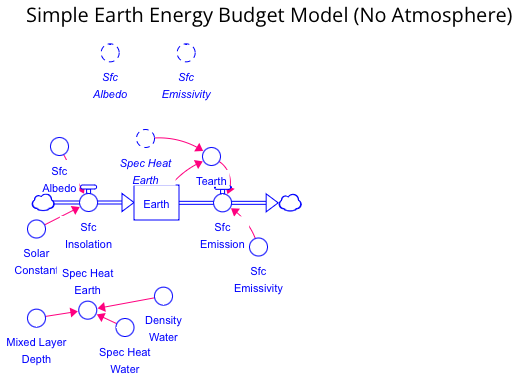
Earth Energy Budget with No Atmosphere
Single Atmosphere-less Surface Energy Budget
#6
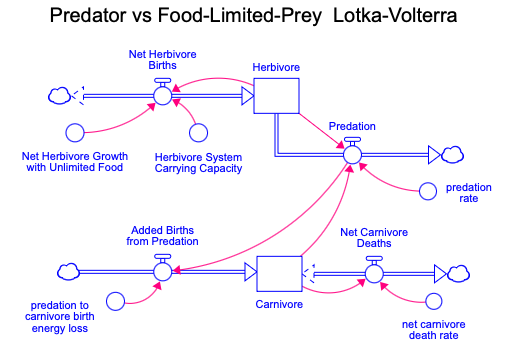
Lotka-Voltera 2-Member Herbivore-Limited vs Carnivore Model
#7
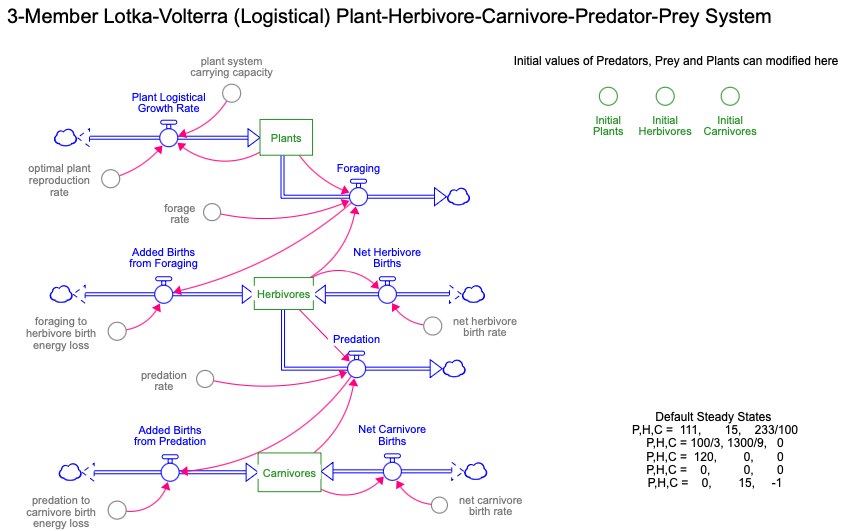
Lotka-Voltera 3-Member Plant-Limited vs Herbivore vs Carnivore Model
#8
#9
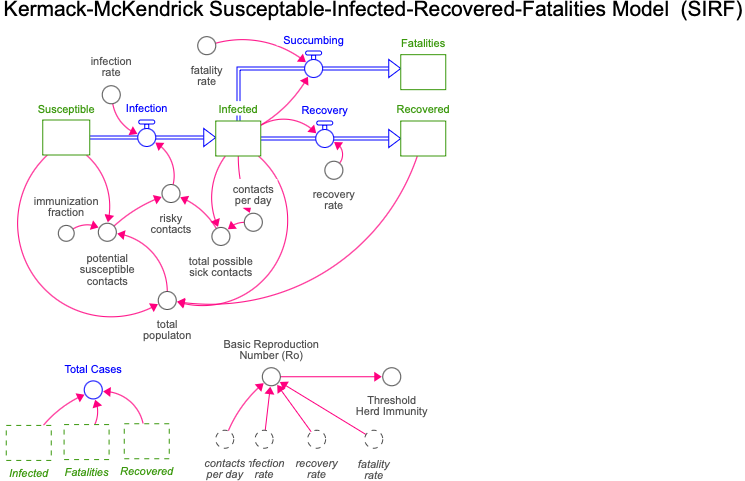
Simple Kermack–McKendrick Epidemic Model
Classic Kermack–McKendrick Model with Susceptible/Infected/Recovered/Fatalities and user-selected im
... Read more
Classic Kermack–McKendrick Model with Susceptible/Infected/Recovered/Fatalities and user-selected imposed immunity.
#10
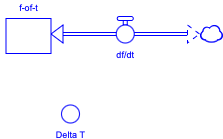
Fast Time Integration Example f(t)=t³
Fast Version of an in-class demo of how a first order taylor series accuracy will change with differ
... Read more
Fast Version of an in-class demo of how a first order taylor series accuracy will change with differenes in Δt
#11
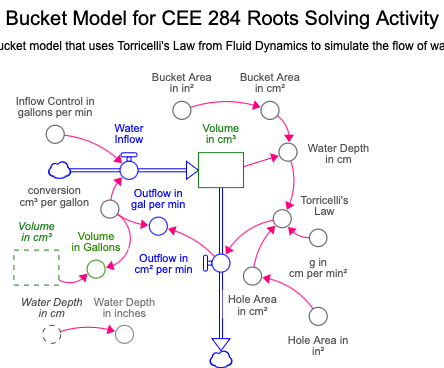
Bucket Model for CEE 284 Roots Solving Activity
#12
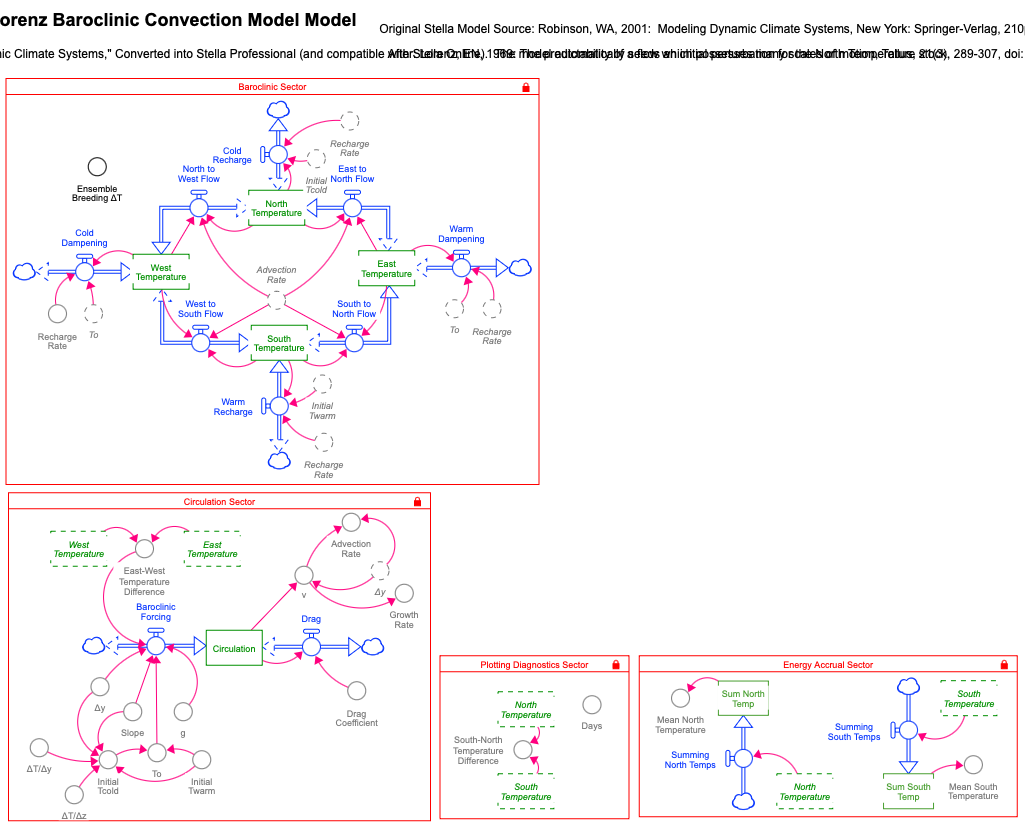
Lorenz Baroclinic Model
This is a translation of Walter Robinson's Stella Model from "Modeling Dynamic Climate Systems," Con
... Read more
This is a translation of Walter Robinson's Stella Model from "Modeling Dynamic Climate Systems," Converted into Stella Professional (and compatible with Stella Online). The model automatically seeds an initial perturbation for the North Temperature stock.
Original Stella Model Source: Robinson, WA, 2001: Modeling Dynamic Climate Systems, New York: Springer-Verlag, 210pp. doi: 10.1007/978-1-4613-0113-4
After: Lorenz, EN, 1969: The predictability of a flow which possesses many scales of motion, Tellus, 21(3), 289-307, doi: 10.1111/j.2153-3490.1969.tb00444.x
#13
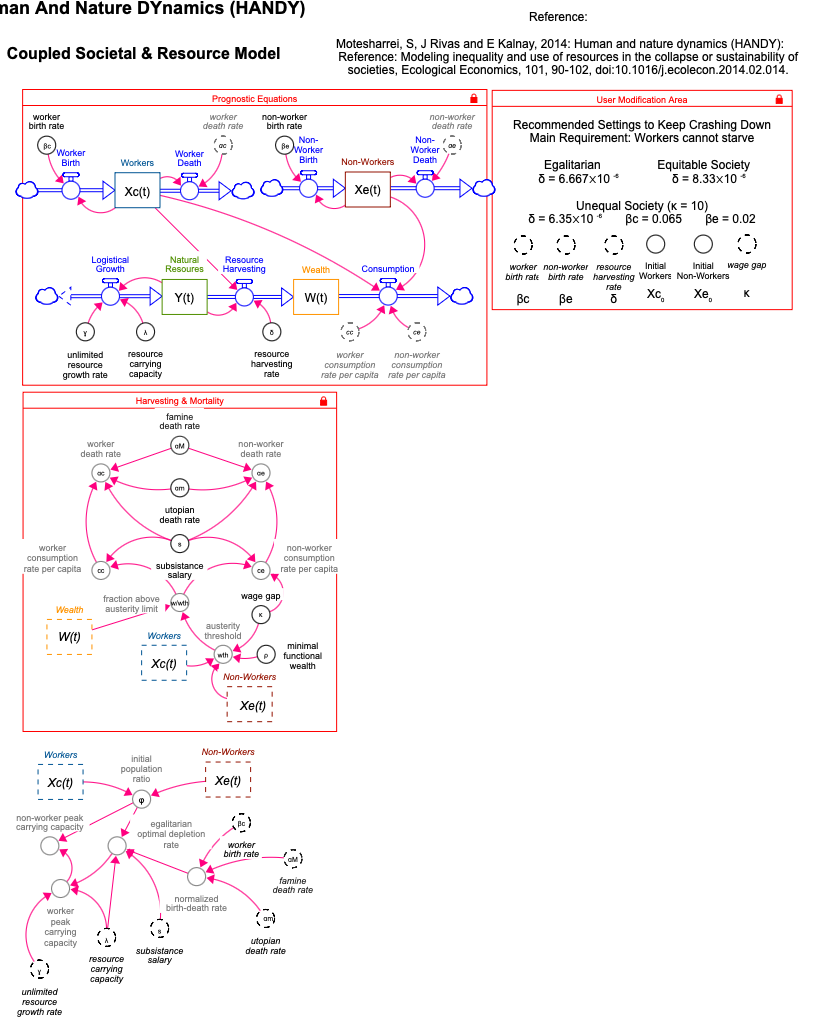
HANDY (Human And Nature DYnamics Model)
The Human And Nature DYnamics Model (HANDY) is used to explore sustainability of coupled people / na
... Read more
The Human And Nature DYnamics Model (HANDY) is used to explore sustainability of coupled people / natural resources/ "Wealth" systems.
Reference: Motesharrei, S, J Rivas and E Kalnay, 2014: Human and nature dynamics (HANDY): Reference: Modeling inequality and use of resources in the collapse or sustainability of societies, Ecological Economics, 101, 90-102, doi:10.1016/j.ecolecon.2014.02.014.
#14
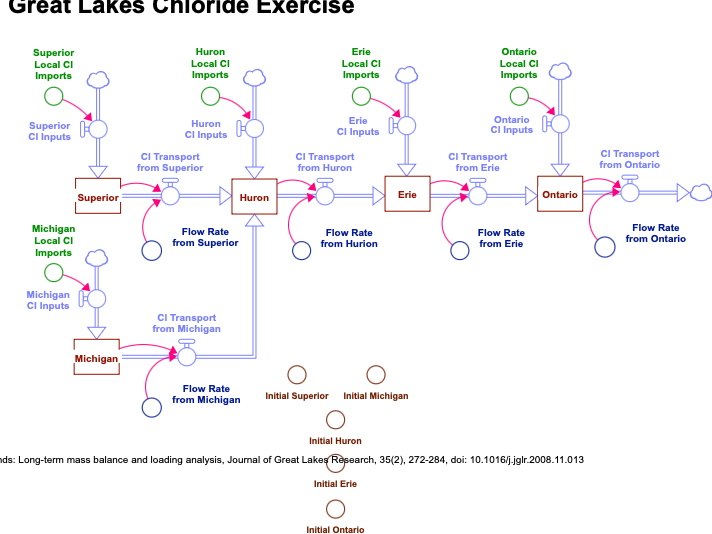
Great Lakes Chloride Transport Exercise
After: Chapra, S, A Dove, and D Rockwell, 2009: Great Lakes chloride trends: Long-term mass balance
... Read more
After: Chapra, S, A Dove, and D Rockwell, 2009: Great Lakes chloride trends: Long-term mass balance and loading analysis, Journal of Great Lakes Research, 35(2), 272-284, doi: 10.1016/j.jglr.2008.11.013
#15
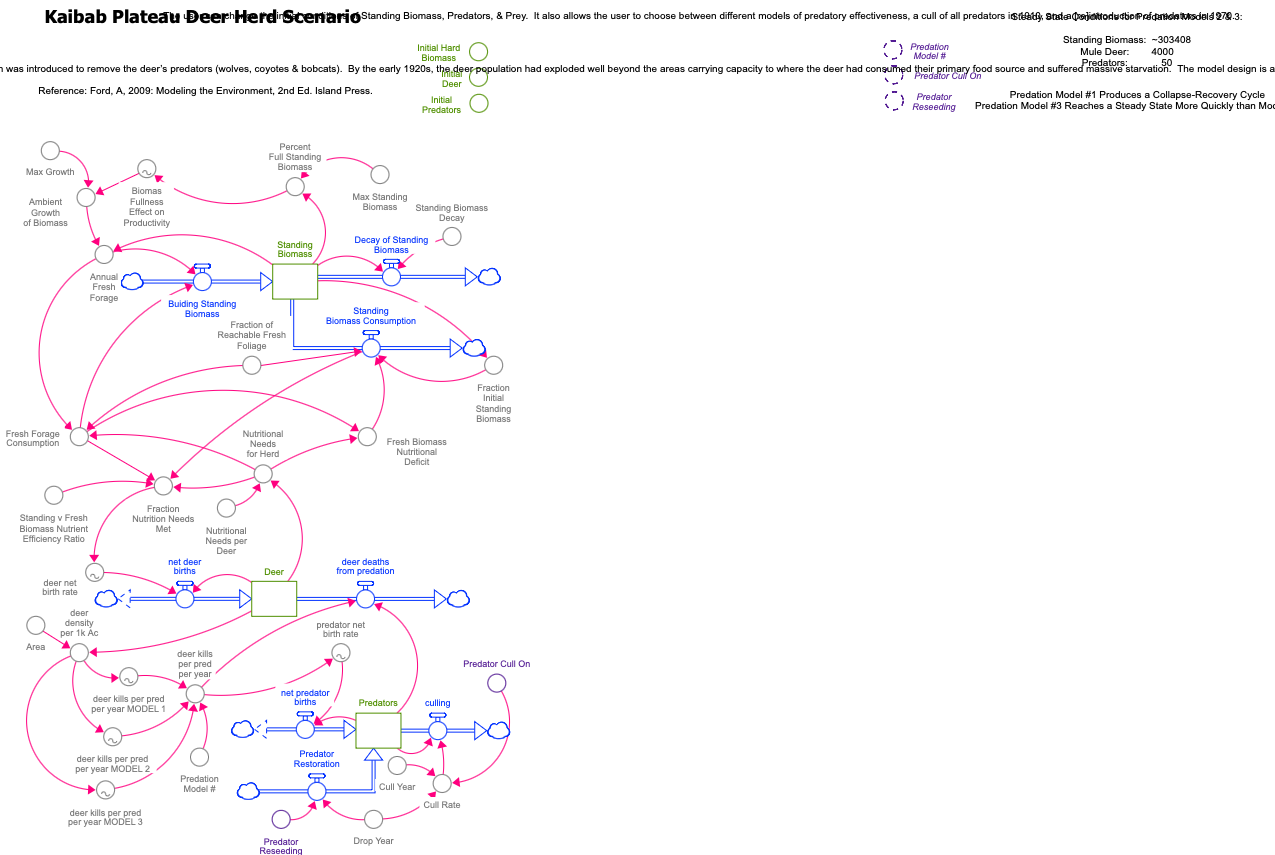
Kaibab Deer Herd Modeling Scenario
This simulation represents the behavior the mule deer population on the Kaibab Plateau, Arizona. In
... Read more
This simulation represents the behavior the mule deer population on the Kaibab Plateau, Arizona. In this classic systems-modeling case, between 1907 & 1939, to “protect” the deer population a culling campaign was introduced to remove the deer’s predators (wolves, coyotes & bobcats). By the early 1920s, the deer population had exploded well beyond the areas carrying capacity to where the deer had consumed their primary food source and suffered massive starvation. The model design is after Ford (2009).
The user can change the initial conditions of Standing Biomass, Predators, & Prey. It also allows the user to choose between different models of predatory effectiveness, a cull of all predators in 1910, and a [re]introduction of predators in 1970.
Reference: Ford, A, 2009: Modeling the Environment, 2nd Ed. Island Press.
Uploading a Bundle from Zip
Instead of creating bundles, categories, and assemblies one by one, you can upload a single zip file that contains all of your bundle's content. To create your zipped bundle, make a folder with your bundle's name and add subfolders with your categories' names. The folder tree should have the same structure that you want the categories to have in your bundle. Place your assembly .stmx files in the appropriate category folders, then zip your bundle folder and upload it using the Upload Bundle from Zip link above.
Assemblies, Bundles, and Categories
Assemblies are self contained models that demonstrate common ways to connect together building blocks and that can be used as parts of other models. This is analogous to using prefabricated wall and roof pieces to construct a house.
Bundles are groups of assemblies with a common use or theme. For example, a Health Care bundle might contain a variety of assemblies that aid in creating health care models. When you download assemblies from the isee Exchange™, you download an entire bundle, rather than individual assemblies.
Categories are subgroups of assemblies within a bundle. For example, a Health Care bundle might contain a Funding category for assemblies related to the management of hospital funds. All assemblies must be assigned to a category—they cannot be assigned to the root of a bundle.
Assemblies, bundles, and categories can be created and uploaded to the isee Exchange™ via the options on the Manage My Assemblies page. To learn more, visit our help pages, or take our assemblies tutorial.
Sim App (Sim)
An interface that allows users to interact with a model.
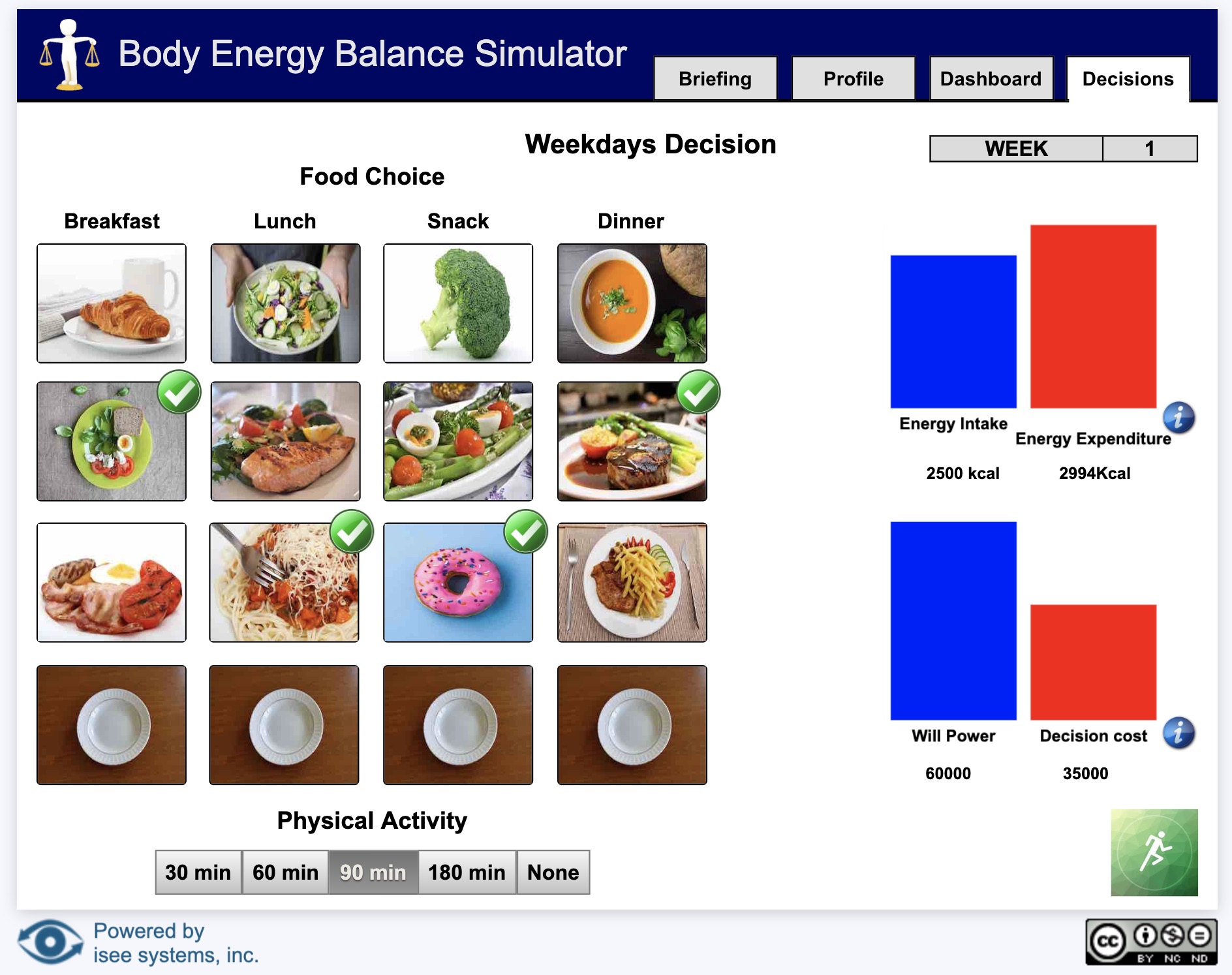
Sim apps allow users to interact with a model using buttons, sliders, knobs, tables, graphs, and storytelling. These interactions help users understand how parts of a system interact.
Interfaces are created by model authors in the Stella desktop software and can be uploaded to the isee Exchange™.
Model
A diagram that represents how elements in a system influence one another.
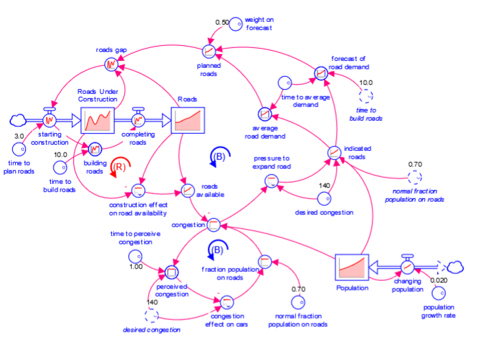
Models are mathematical representations of how elements in a system are connected and interact (e.g., ecosystems, organizations, supply chains). When running models on the isee Exchange™, results can be viewed in output devices like graphs and tables.
Models appear in the isee Exchange™ directory when authors upload them from the Stella® desktop software or create them with Stella Online™.
Causal Loop Diagram (CLD)
A map that represents the feedback structure of a system.
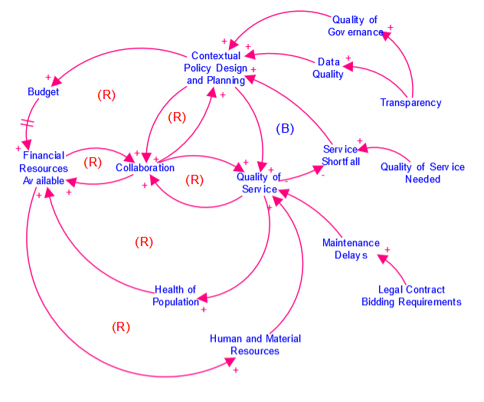
CLDs are high-level maps that represents the feedback structure of a system and easily communicate the essence of a model. They appear in the isee Exchange™ when authors upload them from the Stella desktop software or create them with Stella Online™.